
When it comes to exploring the fascinating world of wildlife, few creatures capture the imagination quite like the cassowary. These magnificent birds, native to the tropical forests of New Guinea, nearby islands and northern Australia, are as intriguing as they are elusive.
Cassowaries belong to the family Casuariidae and the genus Casuarius. There are three species: the Southern Cassowary, the Northern Cassowary and the Dwarf Cassowary. These birds have an evolutionary history, dating back to the dinosaurs. Their striking appearance, characterized by a vivid blue and black plumage, a helmet-like casque on their heads and brightly colored wattles hanging from their throats, makes them one of the most prehistoric looking birds.

The wattles, usually red or blue, serve multiple purposes. Primarily, they play a significant role in visual displays during mating season, helping attract potential mates. These brightly colored features are also believed to aid in social signaling among cassowaries, helping them communicate in the dense rainforest habitats they call home. Additionally, some researchers suggest that wattles somehow helps in regulating their body temperature.
Cassowary Diet and Behavior
Cassowaries are primarily frugivores, meaning their diet consists mainly of fruit. They play a crucial role in their ecosystems as seed dispersers, aiding in the growth of various plant species. Apart from fruit, they occasionally consume fungi, insects and small vertebrates, making their diet quite diverse.
These birds are solitary and territorial. They roam the forest floor in search of food, using their powerful legs and sharp claws to defend themselves and their territory. Despite their seemingly docile nature, cassowaries can be aggressive if threatened, and their claws are capable of inflicting serious injuries.
Where to See Cassowaries
If you’re keen to see cassowaries in their natural habitat, here are some prime locations:
Daintree Rainforest, Australia: One of the best places to spot Southern Cassowaries. The Daintree Rainforest offers guided tours where you can catch a glimpse of these elusive birds.
Mission Beach, Australia: Known for its cassowary sightings, Mission Beach has several walking trails that increase your chances of encountering these birds.
New Guinea: Both the Northern and Dwarf Cassowaries can be found in the dense rainforests of New Guinea. Local guides can help you navigate these regions to spot cassowaries.
Protected Areas and Wildlife Reserves: Various national parks and wildlife reserves across Australia and New Guinea are dedicated to preserving cassowary habitats, providing safe environments for these birds to thrive.
Zoos, Wildlife Parks and Sanctuaries
Australia Zoo, Queensland: Home to several cassowaries. They also provides educational programs about them.
Taronga Zoo, Sydney: Offers visitors a chance to see cassowaries and learn about their conservation.
San Diego Zoo, USA: Known for its diverse collection, including the southern cassowary.
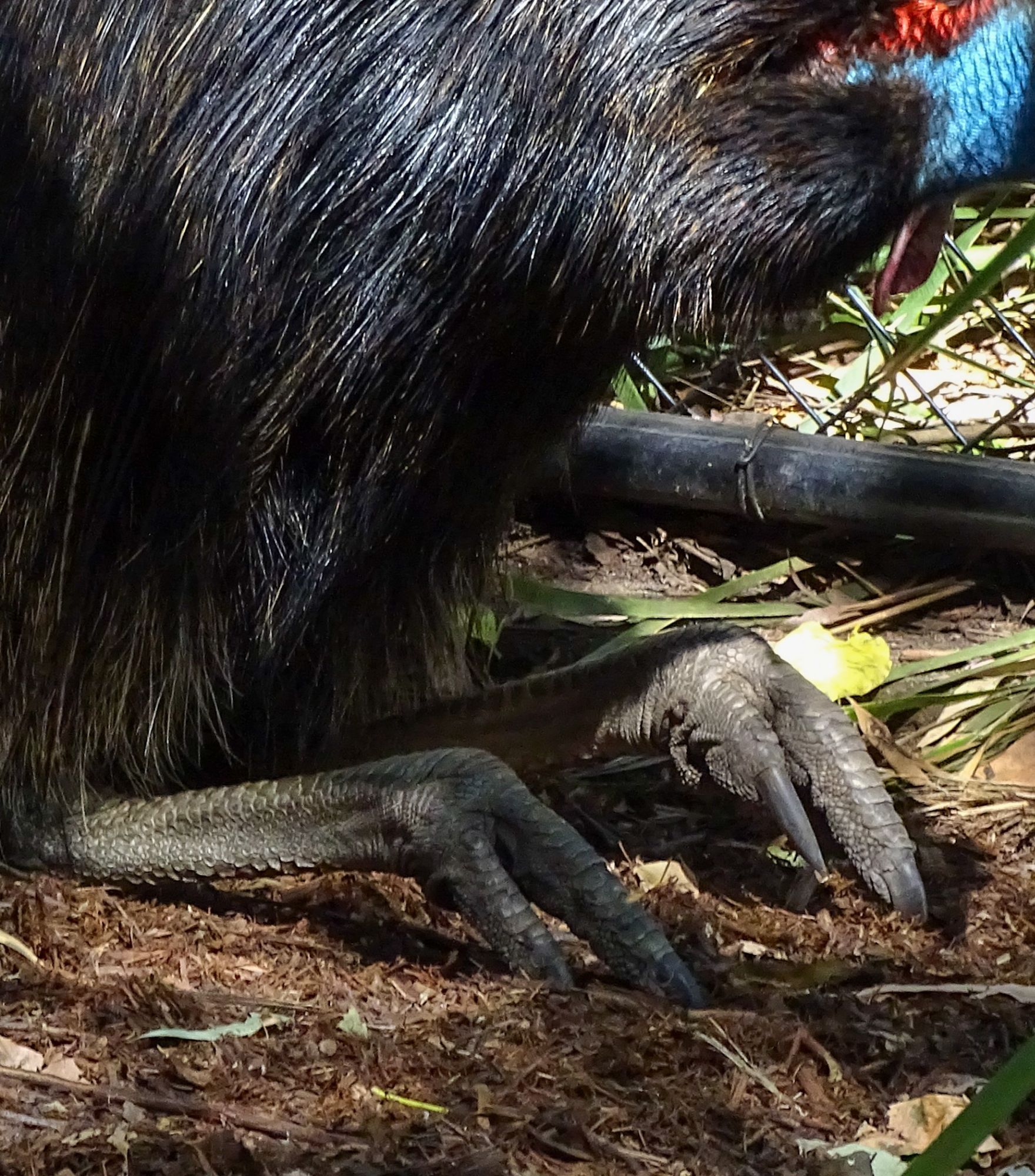
Facts About Cassowaries
Ancient Lineage: Cassowaries fossils dating back to the Pleistocene epoch.
Helmeted Casque: The helmet-like casque on their heads is not just for show. It’s believed to help them push through dense vegetation and may also be a secondary sexual characteristic.
Speed and Agility: Despite their size, cassowaries can run up to 50 km/h (31 mph) and jump up to 1.5 meters (5 feet) in the air, making them surprisingly agile.
Vocalizations: Cassowaries produce low-frequency sounds that are among the lowest known bird calls, which can travel long distances through dense forests.
Breeding and Rearing: Male cassowaries are responsible for incubating the eggs and raising the chicks, a unique trait among many bird species.
Conservation Status: The southern cassowary is listed as Vulnerable due to habitat loss, vehicle strikes and dog attacks. Conservation efforts are crucial for their survival.
Whether you’re an avid birdwatcher or simply someone who appreciates the beauty of wildlife, encountering a cassowary in its natural habitat is an experience you won’t soon forget. Remember to respect their space and contribute to conservation efforts to ensure that future generations can also marvel at the majesty of the cassowary where possible.
Feel free to share your cassowary encounters in the comments. Happy wildlife watching and may your travels be filled with wonder and discovery!
Discover more from Ports In Paradise
Subscribe to get the latest posts sent to your email.
 Ports In Paradise
Great Read Can i leave my thoughts ?! –
Thanks for reading , Love The Blog !!
Thanks – TheDogGod – Pomeranian Puppies & Adult Dog Guides & Tips pomeranianpuppies.uk
LikeLiked by 1 person